Greater Atlanta Area
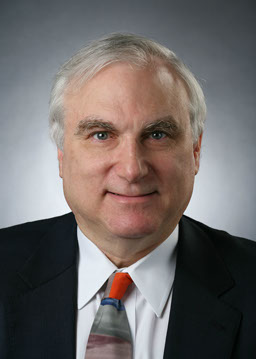
Les A. Schneider, the Managing Partner for Wimberly, Lawson, Steckel, Schneider & Stine, P.C., is an AV rated attorney, who is known throughout the Southeast for his comprehensive representation of employers, government entities, chambers of commerce, and trade organizations. Les is looked to as a standard bearer, providing advice to clients regarding all aspects of employment and traditional labor practice, including but not limited to, discrimination, wage and hour matters, union avoidance, and collective bargaining. In addition, clients often look to Les to negotiate and draft agreements, conduct internal investigations, respond to employee complaints, advise and partner on complicated discipline and discharge matters, create frameworks which foster healthy and productive labor relations, and prepare and represent clients in on-site audits.
Les’ roots are in dispute resolution; while his focus is always on litigation avoidance, when disagreements arise and cannot be resolved he turns his focus to defense management. He represents employers in state and federal courts and before the Equal Employment Opportunity Commission, the National Labor Relations Board, the U.S. Department of Labor, and other administrative tribunals as well as in mediation and arbitration
Les is widely known for his government affairs practice and protects his clients’ interests through state and local lobbying, legislative and regulatory impact analysis, and industry trend analysis. He has been an active lobbyist for over 25 years. Les has testified before the Georgia legislature regarding the effects of many bills. He worked with the Georgia Department of Labor Task Force on the revision of the Employment Security Law. He has contributed to revisions to Georgia’s workers’ compensation statutes and on regulations for the use of prisoner labor in private sector businesses. Les’ contributions extend beyond labor and employment law to education issues. He has consulted on amendments to Tuition Equalization Grant (TEG) rules and the codification of rules for Georgia’s HOPE scholarship.
A sought-after speaker by business and academic groups, Les is valued for his ability to make labor and employment law issues fathomable and manageable. He also regularly speaks to law enforcement personnel and entrepreneurs on matters related to coin-operated amusement machines as a representative of the American Amusement Manufacturer’s Association (AAMA) and the Amusement and Music Operators Association (AMOA). In that same capacity, Les has helped draft legislation in Georgia, Alabama, Florida, South Carolina, and other states pertaining to the bona fide coin-operated amusement machine industry.
Speaking and Writing
Les writes as well as speaks: He is the co-author of both Wage and Hour Law: Compliance & Practice (West Publishing) and A Move Toward Equity: Taxing and Licensing Businesses and Occupations under Georgia Law (The University of Georgia). He is also a co-author along with senior principals Jim Wimberly and Marty Steckel on the book entitled Construction Industry Labor & Employment Law.
Commissions
A current member of the Commissioner’s Advisory Council for the Georgia Department of Labor, Les formerly served on the Georgia Boxing Commission, the Georgia General Assembly's Study Committee on Professional Tax Equity and the Board of Directors for the Horizon Theatre. He is a graduate of Lehigh University and Emory University School of Law and a member of the American Bar Association, the Georgia Bar Association, and The Lawyers Club of Atlanta.
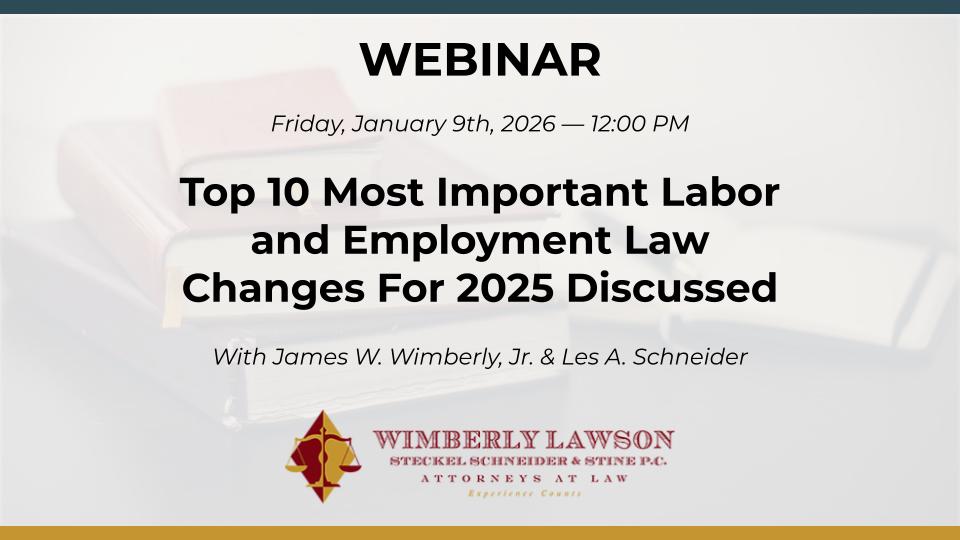
Top 10 Most Important Labor and Employment Law Changes in 2025
As we normally do, we reviewed 2025's biggest labor and employment law changes. This webinar featured Jim Wimberly and Les Schneider discussing the year's “most critical subjects.”
Watch This Webinar
Webinar Key Insights
- Audit and Update Religious Accommodation Procedures: Implement a centralized process for religious requests, as first-line supervisors are often unequipped to handle the new "substantial harm to the business as a whole" legal standard.
- Re-evaluate DEI Terminology and Individual Decision-Making: Ensure every employment decision is based on individual merit rather than group representation to avoid the EEOC's top priority: rooting out DEI-motivated discrimination.
- Eliminate Applicant Flow Logs: Stop tracking race, sex, and national origin for job applicants—unless required by state law—to remove the statistical data necessary for plaintiffs to build adverse impact lawsuits.
- Establish a Formal AI Usage Policy: Create clear guidelines for the use of AI in hiring and performance reviews to prevent discriminatory outcomes and protect your trade secrets and attorney-client privilege.
- Draft "Surgical" Social Media Policies: Avoid overly detailed social media rules that could be viewed as chilling protected speech; instead, use carefully worded protocols that include "weasel words" to protect management's right to intervene.
- Develop a Tiered Immigration Policy: Adopt a comprehensive policy (ideally 10+ pages) that dictates how management should respond to tips regarding undocumented workers and requires regular I-9 audits to ensure full compliance.
- Prepare for Captive Audience Rule Reversals: Be ready to re-implement small group meetings and one-on-ones during union organizing campaigns as the NLRB moves to reverse previous restrictive rulings.
- Monitor National Origin Protections for American Workers: Stay alert to a new enforcement emphasis on protecting American workers from being passed over in favor of immigrant labor through temporary visa programs.
- Adopt a "Merit-Only" Evaluation Model: To stay out of legal trouble, evaluate candidates solely on their merits compared to other applicants, as the government has shifted away from enforcing the "adverse impact" theory in its own prosecutions.
- Handle Gender Identity Issues with Special Counsel: Given the conflict between Supreme Court rulings and current executive orders regarding "binary reality," treat any bathroom or pronoun-related disputes as high-risk matters requiring specialized legal handling.

